


Malé Trakany
The village was settled in ancient times, and its origins are linked to a local legend. The original settlement was divided into two parts in the first half of the 14th century. The first written mention of the village dates back to 1324. Frequent floods caused significant damage in the area, which is why dikes were already built here in the past. Around the mid-19th century, a society for regulating the Tisza River was established, and the original riverbed was modified. Since then, this watercourse has been referred to as the New Tisza. The soil became more fertile and suitable for growing crops, vegetables, and fruit. Apple and plum orchards were planted here, known as Tiszakertek. After World War I, the village became part of Czechoslovakia, later returned to Hungary, and finally became part of restored Czechoslovakia. The village itself was liberated by the Soviet Red Army in November 1944.
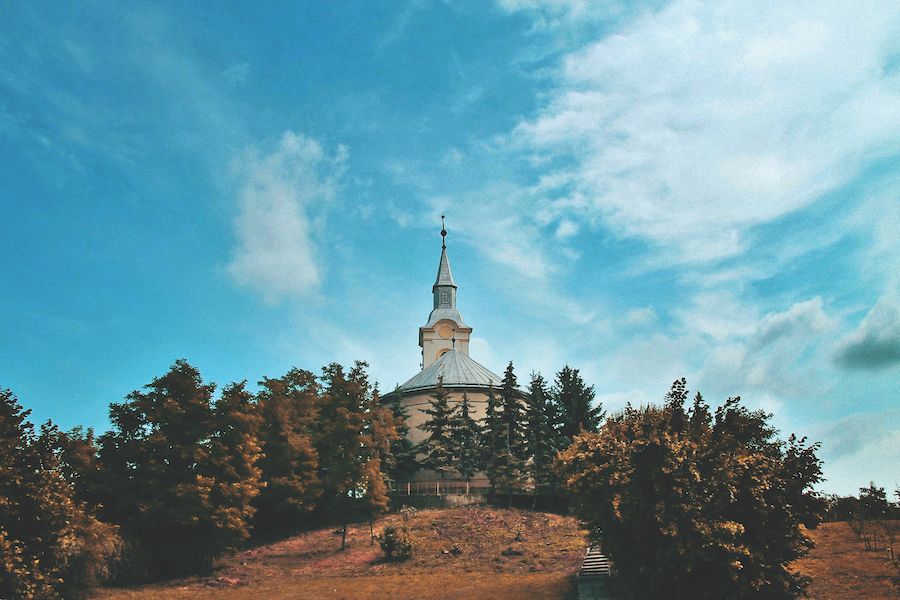
The local Reformed church was built on the site of an earlier Catholic church in the second half of the 18th century, originally without a tower, which was added in the mid-19th century. One of the bells was confiscated during World War I, and a new one was cast in 1922. A bust of Prince Árpád above the entrance is a notable feature. Important monuments include a memorial in front of the cultural house, dedicated to victims of both World Wars, deported members of the Jewish community, and forced labor victims (“malenkij robot”). A more than 100-year-old iron cross, erected by grateful residents returning from America, is also of interest. Visitors can also see a private collection of historical village artifacts from the late 19th and early 20th centuries at the Vitéz Guesthouse courtyard.
Fruit brandy from local plums and apples has been produced in the local distillery since 1957, following traditional methods. Every September, the Plum Days festival takes place at the Aranka Guesthouse courtyard, preserving the tradition of plum processing. Visitors can see plum jam being cooked in large cauldrons, taste traditional plum dishes prepared over an open fire, and enjoy folk performances, craft demonstrations, and children’s workshops. The area is also known for sandy beaches along the Tisza River, part of the Ramsar-listed Tisza Floodplain and a protected Natura 2000 site. In summer, it attracts many tourists. A natural phenomenon called the Tisza blooming occurs here in June, when mayflies swarm in large numbers. The floodplain is also home to two centuries-old oak trees with trunk circumferences of about 5 meters.
Nearby is the tripoint, where the borders of Slovakia, Hungary, and Ukraine meet (one of five such locations in Slovakia). A 6 km-long dike runs along the river, suitable for walking and cycling. Accommodation is available in private lodgings, hostels, or guesthouses. Visitors can also enjoy a wellness center offering a salt cave, infrared sauna, and relaxing massages.