
Cesta svätej Alžbety
The Saint Elizabeth Pilgrimage Route is proof that even modern people seek spiritual experiences that are often achieved through effort, endurance, and long-distance walking. The route offers beautiful natural scenery, cultural heritage, and a deeper understanding of the life and legacy of Saint Elizabeth.
On the occasion of the 800th anniversary of Saint Elizabeth’s birth, a pilgrimage route was established between the cities of Wartburg and Marburg in Germany. This initiative inspired the creation of a pilgrimage trail linking Saint Elizabeth’s birthplace, Sárospatak (Blatný Potok), with Košice, one of the most important centers of her veneration. For centuries, believers on both sides of the Slovak-Hungarian border have honored Saint Elizabeth, making it natural that modern pilgrims continue to follow in her footsteps.
Saint Elizabeth, daughter of the Hungarian King Andrew II, is remembered as a model of piety, compassion, and devotion. As a child, she was betrothed to the son of the Landgrave of Thuringia and was sent to his court at the age of four. She later married Louis IV of Thuringia, with whom she lived in a loving and harmonious marriage. Elizabeth dedicated herself to caring for the sick, the poor, and the dying, inspired by her deep faith and love for God. Widowed at the age of twenty, she embraced a life of poverty, joined the Third Order of Saint Francis, founded a hospital, and devoted herself entirely to charitable work. She died on 17 November 1231 at only twenty-four years of age. Pope Gregory IX canonized her in 1235 after numerous miracles were reported at her tomb.
Visitors to her birthplace, Sárospatak, encounter many reminders of her life, including the remains of the rotunda where she was baptized, her birthplace, and a Gothic basilica minor housing relics associated with the saint. The church also features a bronze relief depicting the famous Miracle of the Roses.
The modern pilgrimage route passes through the Zemplín Hills and is marked by the symbol of a rose. Along the way, pilgrims travel through villages such as Bodrogolaszi, Komlóska, Erdőhorváti, Regéc, Telkibánya, Hollóháza, and Füzér. The route reveals the region’s rich wine-making traditions, historic Calvinist and Greek Catholic churches, castle ruins, monasteries, folk architecture, and numerous cultural monuments.
Pilgrims alternate between forest paths and open meadows, resting at springs and wells along the way. The route includes challenging ascents and demanding terrain, making the journey both physically and spiritually rewarding. Crossing the Slovak-Hungarian border near the meadow of Oláh, pilgrims continue through Nižná Myšľa and Kokšov-Bakša before finally reaching Košice.
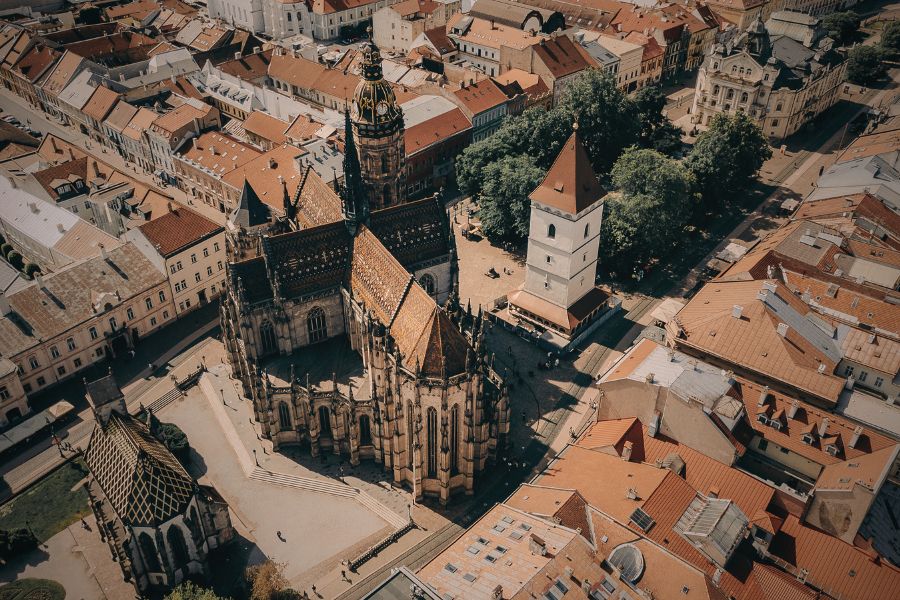
Guided by the symbol of the rose, the pilgrimage culminates at the magnificent Cathedral of Saint Elizabeth, the largest church in Slovakia and one of the most important Gothic monuments in Central Europe.